Gen Z: The Secret Ways Porn is Sabotaging Your Dating Life, A Professor's Perspective
Guest post by Dr. Jessica Journeay, associate professor and Chair of Communication Studies at Hope International University
Imagine coming of age in a world where your perceived value is based on your social media aesthetic. On a daily basis you scroll past influencers boasting about the lucrative salaries they earn on their OnlyFans accounts, and an AI bot is your most trusted confidant. Unfortunately, this is the reality for many of my Gen Z students who grew up with a phone-based childhood.
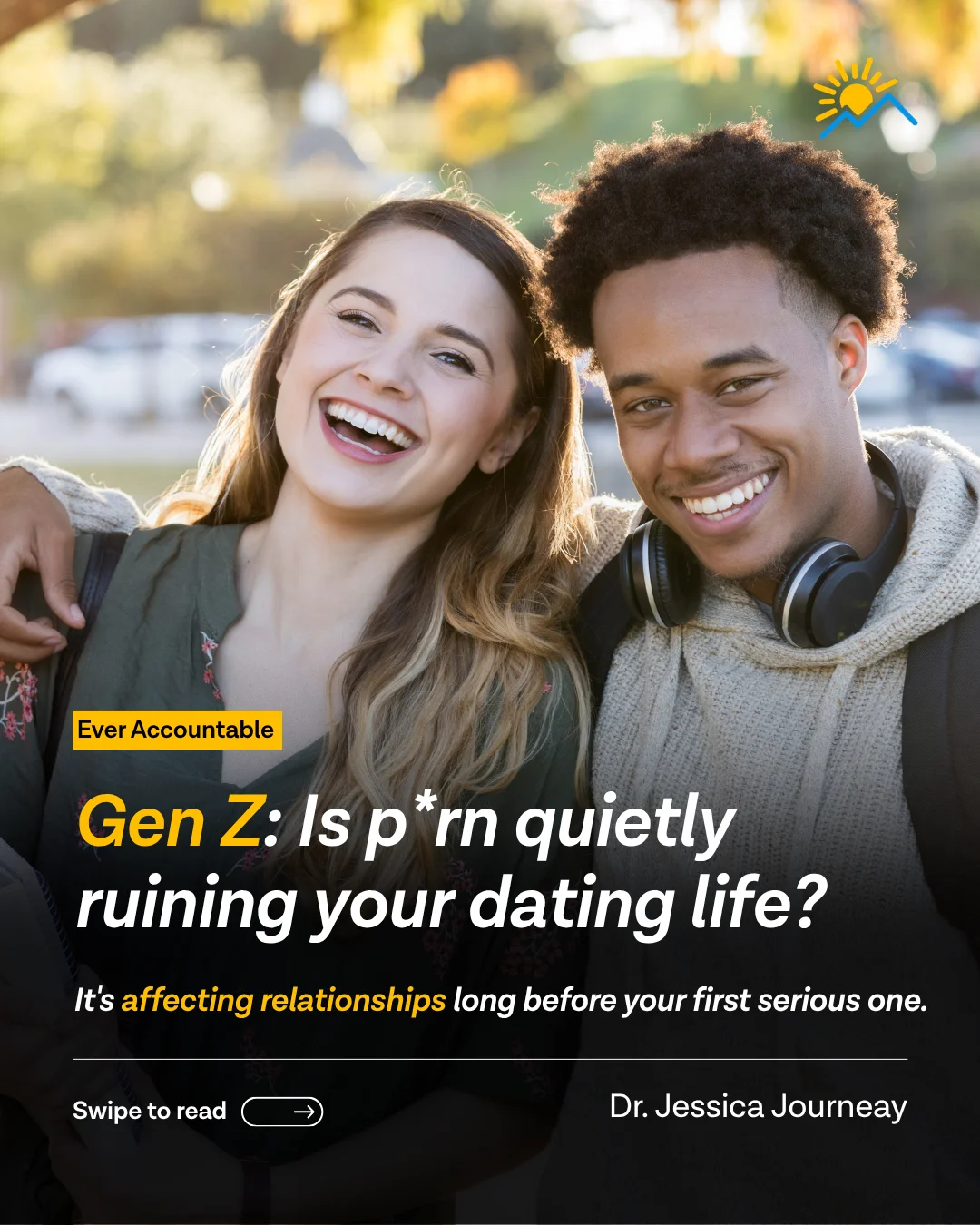
The COVID-19 pandemic left many young people alone in their bedrooms, missing out on vital socialization time with peers and big milestones like high school graduations. Suddenly phones became a main outlet for companionship. The digital age has ushered in a layer of disconnection for young adults, unlike anything previous generations have ever experienced. In an era of information overload, Gen Z craves authentic conversations about how to navigate this rapidly shifting social world, especially when it comes to modern dating where porn is also a secret competitor and influencer.
Table of Contents
- Understanding Gen Z and Modern Dating Challenges
- Pornography’s Impact on Gen Z: 4 Key Ways It Ruins Your Dating Life
- How Gen Z Can Combat The Damages of Porn
- Meet Dr. Jessica Journeay
Understanding Gen Z and Modern Dating Challenges
As a communication studies professor, I notice my students grappling with the tension between knowing technology is impacting them and being unsure about how to proceed in healthier ways. One day in class, a student, Justin, bravely raised his hand and said, “I don’t ask anyone out in person because I’m terrified of being rejected. People are so harsh these days. The strategy is to get their Instagram handle and then slide into their direct messages.”
The class erupted into knowing laughter, prompting further passionate discussion on the topic. I wonder if the reason this conversation sparked such a reaction from his classmates was that, on some level, we all have a deep-rooted fear of rejection. It can feel paralyzing. My students’ concerns made sense when I considered the pervasive cancel culture and extreme social media polarization they grew up witnessing.
They see a growing desire to loosely define relationships and enter into “situationships” to avoid the vulnerability of being perceived as too invested or risking a potential dating partner calling them “cringe.”
As their professor, my heart breaks because I see these vibrant young people craving connection yet feeling uncertain about how to form meaningful romantic relationships. When I ask them to share their thoughts on why these trends are happening in their generation, they jokingly reply, “It’s the d*mn phones.”
For many Gen Zers, fear of social rejection from a potential romantic partner can lead them to seek out pornography online as an outlet to fulfill their sexual desires.
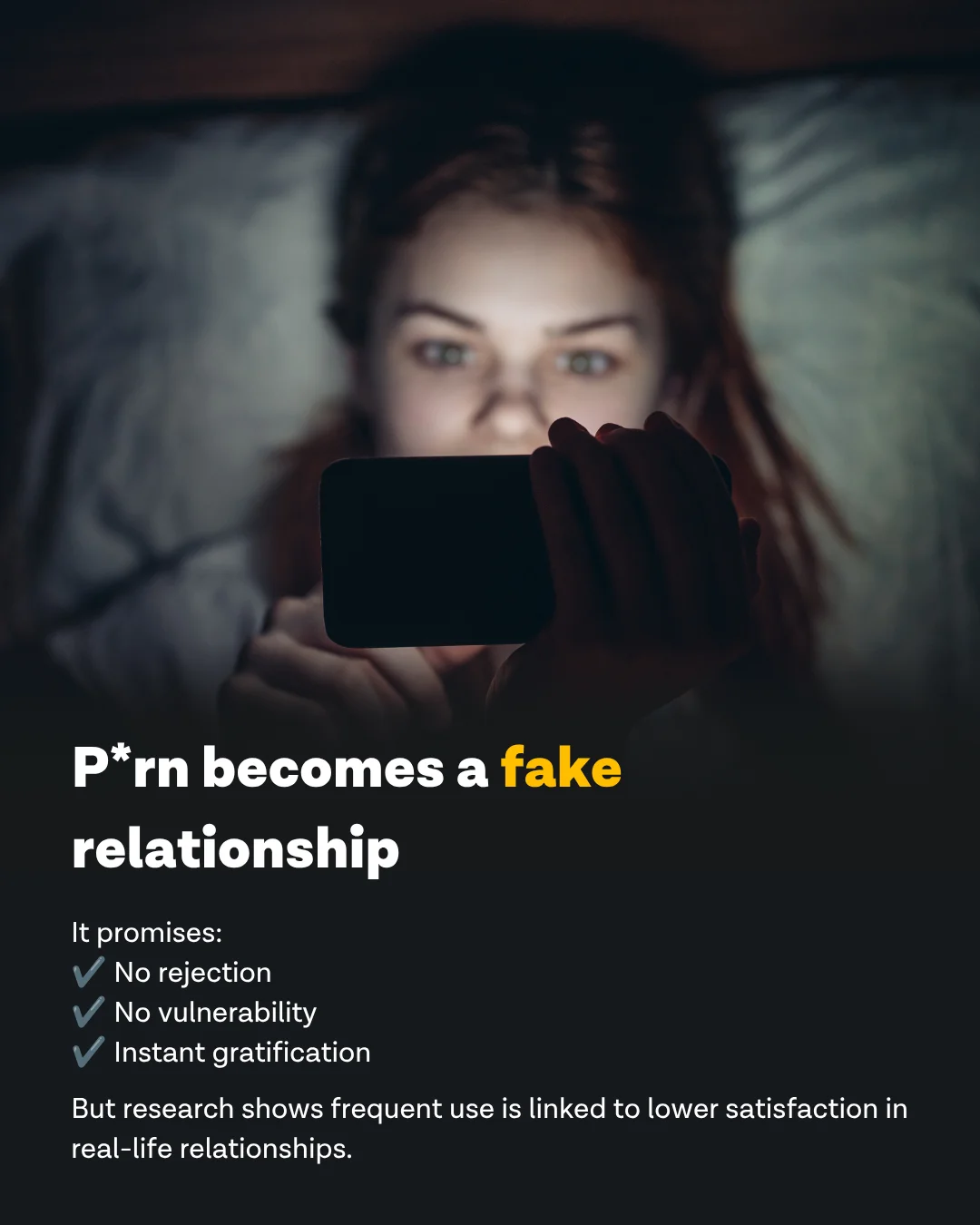
Pornography’s siren song is the promise of free virtual sexual exploration and expression, but the irony is that frequent users report decreased sexual satisfaction with their real-life partners.
This anonymous and highly accessible content pulls users into a stormy sea of isolation, disconnection, and potentially addiction that can have ripple effects on their future romantic relationships and marriages.
Pornography’s Impact on Gen Z: 4 Key Ways It Ruins Your Dating Life
1. Promoting fake relationships: the influence of social media and sexual content on social interactions
Leading expert on the effects of new media on Gen Z, Dr. Jonathan Haidt, author of The Anxious Generation, argues that there is a marked generational difference beginning around 2010 with the introduction of social media. Compared to Millennials (1980-1994), Gen Z (1995-2012) reports higher rates of anxiety and depression, along with lower confidence.
According to this body of research, unrestricted access to social media and sexual content has fundamentally shifted the way young people interact with each other.
2. Perpetuating online trauma: early exposure to porn shapes real-life sexual interactions
Gen Z grew up in an environment where their parents shielded them from the dangers of the physical world, yet largely left them unsupervised in the digital world (Haidt, 2025). Unregulated exposure to pornography, often from as young an age as 10 years old, has negatively impacted this generation’s mental health and social skills. Most children and adolescents accidentally stumble upon explicit content on social media apps, online gaming platforms, or through friends with internet access. Early exposure to explicit content can be experienced as a form of sexual trauma (Alvarez-Segura et al., 2025), which meaningfully shapes expectations of real-life sexual interactions.
Many of my students have never had a conversation about the effects of pornography on their mental health or romantic relationships. In my experience, they are eager to discuss the topic and learn about what the research trends show because they want some guidance or insight on how to navigate it.
I’ll never forget a student, Daniel, coming up to me on campus after a class discussion on my research. He briskly walked over and earnestly said, “Thank you for sharing your research with us. I’ve never heard anyone discuss the negative effects of porn, and I can see how it is hurting relationships. I think it’s a big problem in my generation. I wish more people would talk about this.”
3. Modeling an unhealthy belief system: objectification and normalization of sexual violence in real life
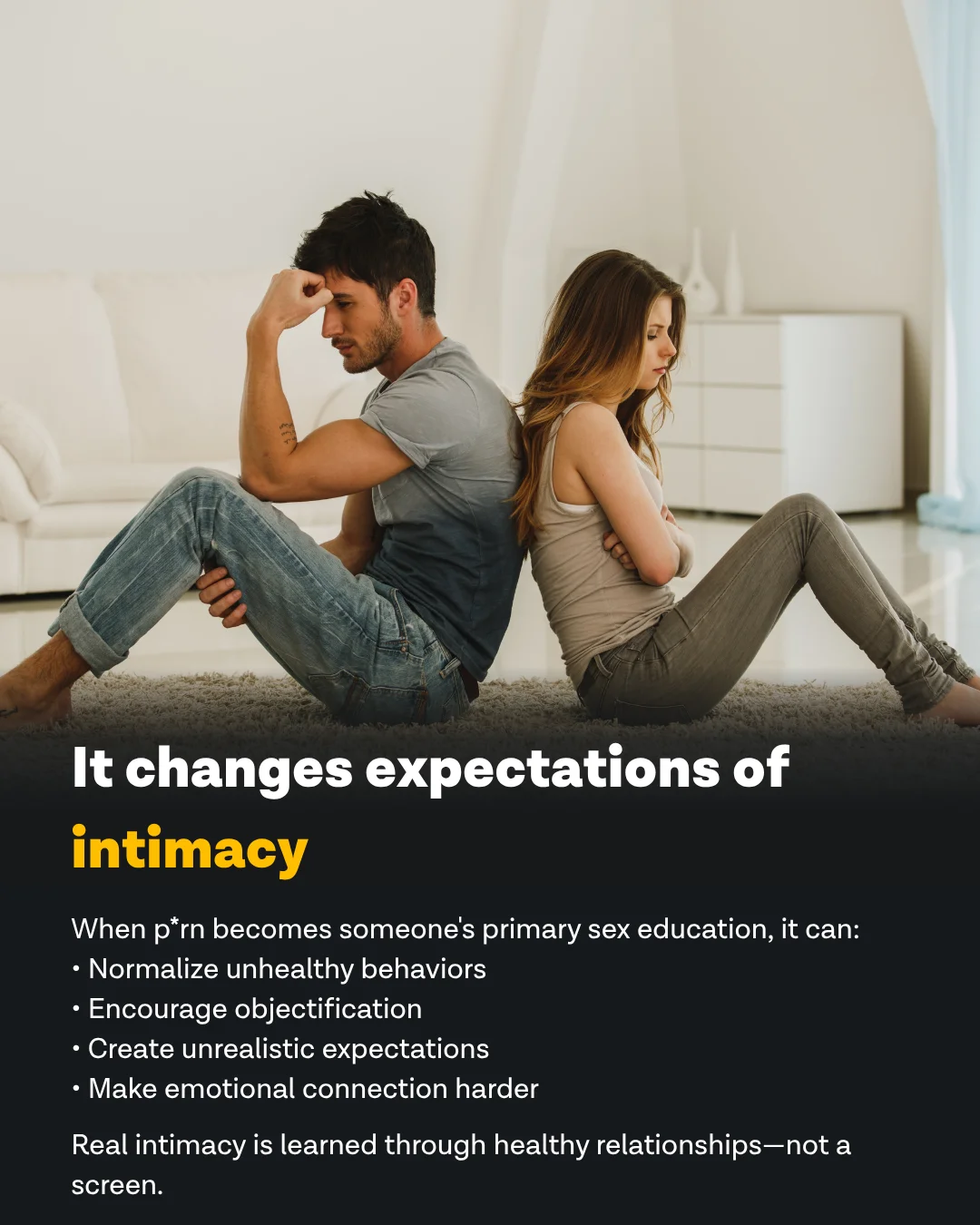
If pornography is a main source of sexual education, then the content depicted can have a more magnified impact on the users’ beliefs and behaviors surrounding sex (Wright et al., 2022). Given the fact that the majority of mainstream pornography depicts objectification of women, sexual aggression, and potentially dangerous acts such as choking and condomless sex, these are problematic depictions for adolescents to base their understanding of real-life sex on.
Research supports this idea, with studies suggesting that pornography use, especially of violent content, is linked to sexual aggression and decreased sexual satisfaction among adolescents (Wright et al., 2021). Even though users think their porn habit is a private behavior that is between them and the screen, it typically extends to impact their real romantic relationships and sexual satisfaction.
For many young men, the consequences of viewing this content from such a young age can normalize sexist attitudes and objectification of women. For many young women, porn teaches them to objectify their own bodies for male pleasure and normalizes porn-like sex, which is often aggressive and emotionally removed.
I’ve had female students share, with tears in their eyes, that their sexual partner engaged in sexual choking, a behavior which is normalized in pornography, without their consent, which was immensely violating and terrifying.
4. Promising lies: viewing porn as a harmless behavior
The false promise of pornography is that the content is completely secret and allows for private sexual exploration, especially when an individual is single or lonely, staying between the user and their phone. However, the sad reality is that the virtual sexual world of pornography does not stay contained within a screen, but it reaches out and harms true intimacy with real romantic partners. This type of content can affect attitudes and behaviors that may further isolate people in future romantic relationships. Or worse, the content may influence a user to act in a way with a partner that harms the other.
How Gen Z Can Combat The Damages of Porn
It is essential to create safe spaces for young people to process their thoughts and experiences surrounding pornography. Although it’s not Gen Z’s fault that they were exposed to explicit content at such a young age, they have the choice to take action steps to reclaim healthier relationships.
So, I will offer you the same advice I offer to my students. If you want to have a more connected, vibrant, and engaging sex life in the future with someone you love, then consider these simple steps you can take to reclaim real connection.
- Create boundaries for yourself around the content you are willing to use.
- Get support through an accountability app like Ever Accountable.
- Speak with a trusted mentor about how to navigate this rapidly changing world of technology.
Don’t let the lure of pornography pull you into the depths of counterfeit intimacy, but instead choose real relationships.

Despite the challenges Gen Z faces in this age of technology, I believe there is still hope. I’ve seen an increasing number of students aim to reduce their screen time and get involved in clubs, volunteering, and physical fitness to strengthen their interpersonal skills.
I was encouraged this last semester when a student, Rebekah, decided to write her research paper in a critical thinking class, urging her Gen Z peers to spend less time on their phones and more time connecting with others face-to-face.
In the rapidly shifting digital age, we all will need to find our way back to each other. I believe Gen Z, with their desire for authenticity and real connection, just might lead that charge.
Meet Dr. Jessica Journeay
Dr. Jessica Journeay (Ph.D., Chapman University) is an associate professor and the chair of Communication Studies at Hope International University. She is an interpersonal and media effects scholar, and her primary research examines the effects of pornography use on romantic relationships. She has published work in the Journal of Media Psychology and in Mass Communication and Society. Dr. Journeay is passionate about equipping others with knowledge and communication techniques to enhance their personal relationships.

References
Alvarez-Segura, M., Fernández, I., El Kasmy, Y., Francisco, E., Gallo Martínez, S., Ortiz Jiménez, E. M., & Butjosa, A. (2025). Impact of pornography consumption on children and adolescents: A trauma-informed approach. Frontiers in Child and Adolescent Psychiatry, 4, 1567649. https://doi.org/10.3389/frcha.2025.1567649
Haidt, J. (2025). About: The Anxious Generation movement. The Anxious Generation. https://www.anxiousgeneration.com/about
Wright, P. J., Herbenick, D., Paul, B., & Tokunaga, R. S. (2021). Exploratory findings on U.S. adolescents’ pornography use, dominant behavior, and sexual satisfaction. International Journal of Sexual Health, 33(3). https://doi.org/10.1080/19317611.2021.1888170
Wright, P. J., Tokunaga, R. S., Herbenick, D., & Paul, B. (2022). Pornography vs. sexual science: The role of pornography use and dependency in US teenagers’ sexual illiteracy. Communication Monographs, 89(3), 332-353. https://doi.org/10.1080/03637751.2021.1987486